
People Also Search For (PASF): Meaning, Importance & SEO Strategy for Intent-Driven Rankings
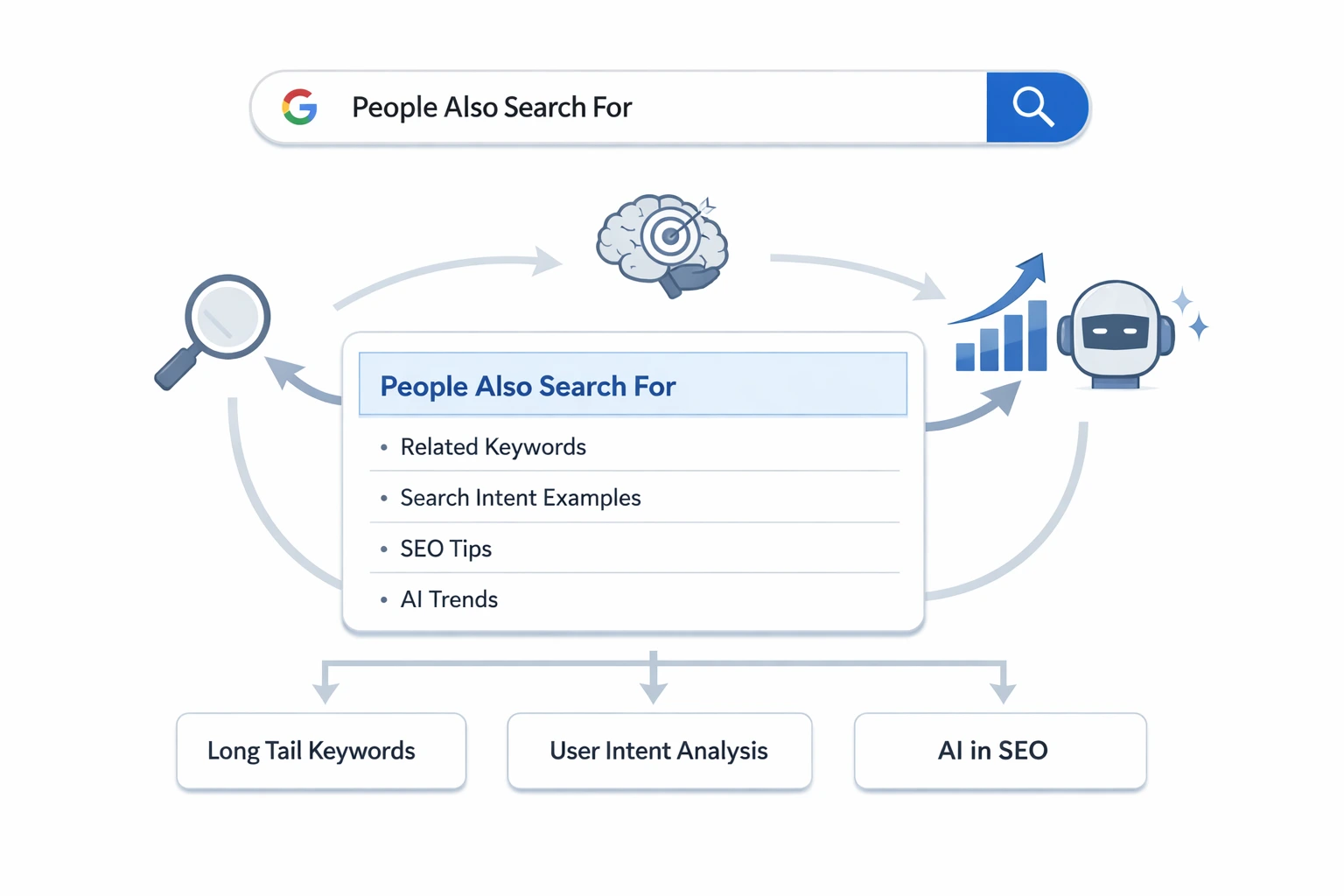
Table of Contents
People Also Search For (PASF) is a Google search feature that shows related queries based on how users refine their searches. It often appears when someone clicks a result and returns to the search page. These suggestions reflect real search behaviour and evolving intent. For SEO teams and marketers, PASF offers a practical way to understand intent, discover supporting keywords, and improve content relevance without relying only on traditional keyword tools.
What is People Also Search For (PASF)?
The ‘People Also Search For‘ section represents the list of related searches that Google displays as part of your search results when you click on an entry and return to the SERPs. The PASF feature displays suggestions based on users’ previous searches. For instance, if you search for “term insurance”, you might see additional PASF suggestions such as “term insurance vs life insurance” and “best term plan”.
Users commonly observe this feature after engaging in click-back behaviour, which indicates a strong signal of real-world search refinement.
How Does Google Generate PASF Suggestions?
-
User behaviour signals
Users’ interactions with search results closely influence PASF suggestions. When users click a page and return quickly, Google records this pattern. Repeated behaviour across many users leads to refined search suggestions.
-
Contextual and semantic relevance
Google also relies on contextual understanding. Related entities, intent clusters, and topic relationships influence PASF results. Location, device type, language, and personal search history may slightly affect which suggestions appear.
Why PASF Keywords Matter for SEO?
PASF keywords uncover the motivation behind what people do when they find something on search engines. They represent the most common query levels between general search terms and specific decision-making queries within the purchase funnel. By analysing PASF, marketers can ask the people indirectly, using behaviour instead of surveys or guesswork.
They also support long-tail targeting. Many PASF queries do not show measurable volume in tools, yet they attract users who already know what they are looking for. This improves relevance and engagement.
How Does PASF Influence User Search Behaviour?
PASF supports query refinement. The majority of users perform multiple searches before they make a purchase decision. PASF can help them through this part of the funnel as well as provide them with an opportunity to make an informed decision.
Many People Also Search For queries that are commercial or comparison-based, such as “best”, “vs.”, or “alternatives”. This trend is evident in the strong intent expressed by PASF-type keywords, which can lead to quality traffic.
How to Find People Also Search For (PASF) Keywords?
- Manual Google method
- The simplest method is direct observation.
- Search for a primary keyword
- Click one result
- Return to the SERP
- Note the PASF suggestions shown
- Using SEO tools
A browser extension like Keywords Everywhere allows users to type quickly through its ability to automatically fill in the “People Also Ask” (PASF) fields. Similarly, tools such as Ahrefs and SEMrush provide an estimate of how “strong” a person’s intent is, even when there is no search volume. These PASF keywords indicate the person’s interest has been refined and focused, which may reflect a higher likelihood of conversion.
How to use PASF Keywords in Content?
PASF keywords really work the best when you have a clear connection to your user’s Intent on Search. Informational PASF typically fits better with blog articles and guides, whereas Commercial PASF works better with Landing Pages and Comparison Content.
These keywords can be placed naturally in H2s, FAQs, and supporting body sections. PASF also supports internal linking, where related articles connect through refined anchor text.
Care should be taken to avoid keyword cannibalization. Each PASF cluster should map to a distinct content purpose.
PASF Within a Broader SEO Strategy
PASF supports topical authority rather than replacing core keyword research. When combined with People Also Ask and Related Searches, it strengthens semantic coverage.
In AI-driven SERPs and Google AI Overviews, the “People Also Search For” feature helps content align with actual search journeys rather than relying on static keyword lists. It works best as a supporting signal within a wider SEO framework.
Can Search Volume Be Seen for PASF Keywords?
Google does not show direct volume for PASF queries because they are behaviour-based rather than standalone keywords. SEO tools estimate volume using similar queries and trend patterns.
Many keywords in PASF show up as zero-volume keywords, but they actually tend to produce better results. In competitive niches, these queries often bring better engagement with less competition.
How to Map PASF Keywords to Search Intent?
Generally, there are four types of PASF query intent:
- Information: definitions and explanations of concepts.
- Navigation: research on brands and platforms.
- Commerce: research, comparisons and reviews of products and services available.
- Transaction: search for pricing, plans and/or applications.
Optimizing Content to Trigger PASF Visibility
Content depth and topical completeness increase the chance of alignment with PASF queries. Using related entities, keywords, and subtopics increases the semantic relevance.
The factual accuracy and clearly stated and well-cited presentations of the various types of EEAT improve the factor of trust and relevance.
Tracking PASF Performance
Using Google Search Console provides a means for tracking clicks and impressions for PASF-centric queries. Segmenting pages that target PASF shows how users behave differently compared to broad keywords.
Stakeholders use metrics, such as dwell times, return behaviours, and assisted conversions, to quantify the impact of PASF on their businesses.
Common Challenges With PASF Optimization
People Also Search For results change frequently, making tracking difficult. Overlap with People Also Ask can cause duplication.
The attribution process remains indirect, and creating scalable PASF research for larger sites requires manual effort to do so. Aligning PASF with business objectives ensures the relevancy of discovered intent.
Conclusion
PASF should be considered more as an additional layer on top of your SEO strategy, versus a replacement or independent strategy product by itself. Competitiveness and rapid changes will continue requiring a refresh of your PASF research. By using PASF to ask the people through observed behaviour, SEO teams can develop content based on how searches will progress rather than a list of keywords provided by SEO tools.
From PASF insights to intent-driven content strategies, we align your brand with how customers actually search. The result? Higher visibility, stronger engagement, and measurable business growth.
Your audience is already telling Google what they want.
We will help you listen, interpret, and rank for it. Partner with 1702 Digital to build an SEO roadmap that follows real user intent.
FAQs on PASF
1: What does ‘People Also Search For’ mean?
It refers to related queries Google shows based on how users refine their searches. These suggestions reflect real user behaviour, helping marketers understand how search journeys progress. PASF is especially useful for uncovering mid-funnel and decision-stage queries.
2: Is PASF better than keyword tools?
It complements keyword tools by showing real SERP behaviours rather than replacing them. While tools show what people might search, PASF shows how users actually adjust their queries. Together, they provide a more complete SEO strategy.
3: How often should PASF research be updated?
For competitive industries, PASF research should be refreshed every 3–4 months to keep up with changing user behaviour. For stable niches, biannual updates may be sufficient. Regular reviews ensure your content stays aligned with current search intent.
4: What is the difference between People Also Search For and People Also Ask?
People Also Ask shows question-based expansions, while PASF displays alternative or refined queries based on click-back behaviour. PASF is more behaviour-driven, whereas PAA is query-driven.
5: Does PASF affect rankings directly?
PASF does not directly impact rankings, but optimizing content around PASF keywords improves relevance, engagement, and intent alignment—factors that indirectly support higher rankings.
6: Are PASF keywords useful for AI Overviews?
Yes. PASF aligns closely with how AI models interpret search journeys. Content that addresses PASF queries clearly and comprehensively has a higher chance of being cited in AI Overviews.
7: How does PASF support topical authority?
By covering related refinements and subtopics, PASF helps build semantic depth, signalling topical authority to both search engines and AI systems.
Like What You Read?
Have an Idea and Want to Build Something Together? Contact Us Now
4 Best SEO Plugins for WordPress in 2026
Fed up with trying to make your WordPress website stand out? Then you need the appropriate software kit. Although great…
Read more →
How Content Chunking Improves SEO, AI Visibility & User Experience?
The way content is structured has mattered for readability. But with AI-driven search now reshaping how information is discovered, structure…
Read more →
10 Best Shopify SEO Tools Every eCommerce Needs To Optimise The Store
There are challenges and tasks to take your Shopify store live and to rank it. With the number of online…
Read more →