
Social Media Platform Comparison 2026: Instagram vs Facebook vs X vs Snapchat
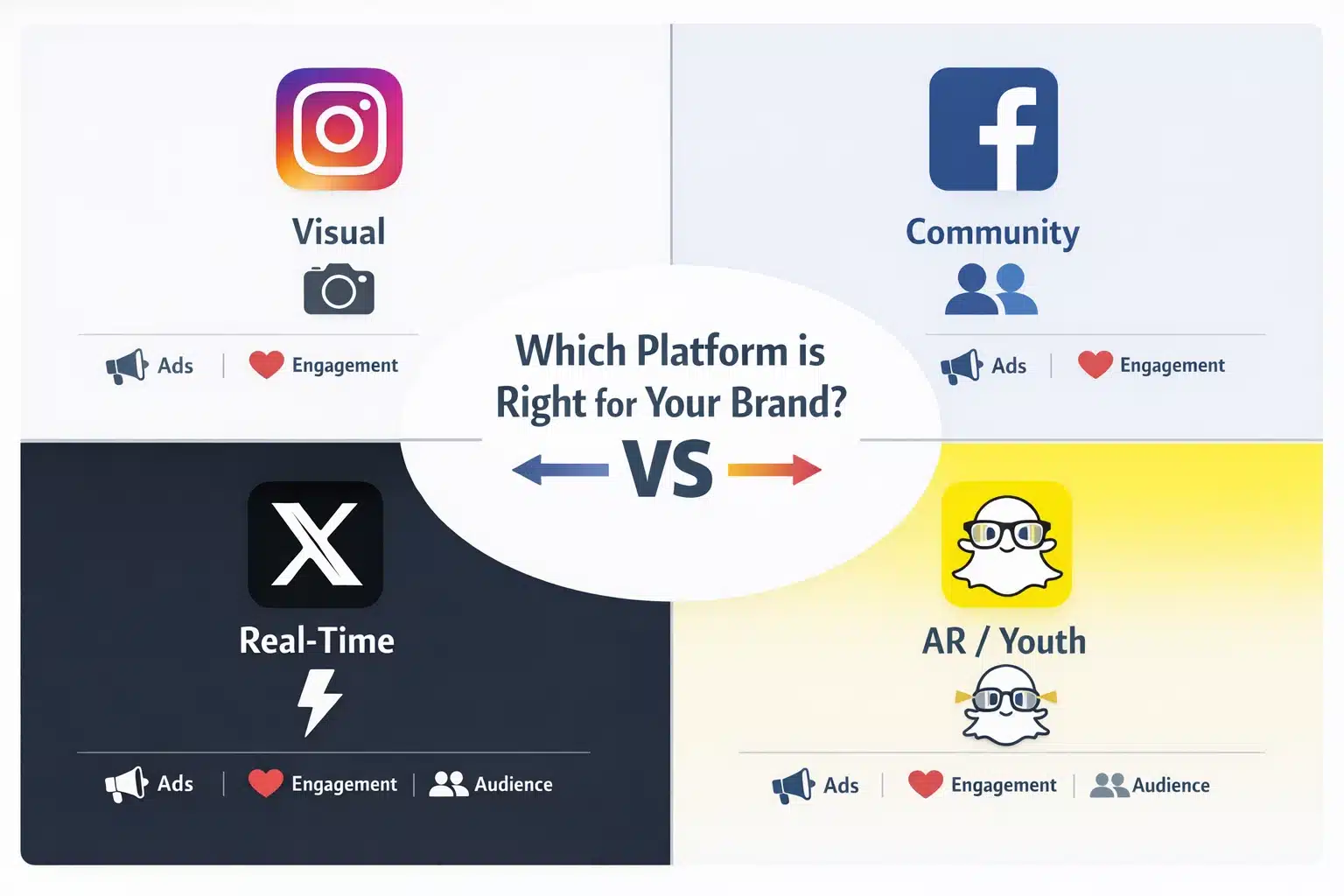
Table of Contents
Summary
Social media networks differ in user audiences, ways to engage, and PPC advertising capabilities. Instagram, Facebook, X (Twitter), and Snapchat will be compared against one another to find the best fit for your business goals. This evaluation is based on usage trends, ad features offered by each platform, and engagement metrics available for each. Data is represented clearly in the event that it is publicly accessible.
- Instagram works best for visually driven brands targeting younger audiences, with high engagement driven by Reels and Stories.
- Facebook offers the broadest reach across age groups and supports diverse content formats, including text, images, videos, and communities.
- Twitter (X) is ideal for real-time engagement, trending conversations, and customer interaction through quick updates.
- Snapchat is suited for brands targeting Gen Z with immersive, short-form, and interactive content like AR lenses and Stories.
- Advertising capabilities are strongest on Facebook and Instagram due to advanced targeting and tracking features.
- PPC options vary slightly, but all platforms support performance-based advertising models focused on clicks, engagement, and conversions.
- Platform choice should align with business goals, audience demographics, and content strategy rather than a one-size-fits-all approach.
Platform Profiles: User Base and Engagement
Instagram vs Facebook: Audience and Reach
- Instagram vs Facebook audience demographics differ markedly.
- Facebook has a wide range of user demographics due to its ability to cater to different age groups.
- Instagram has a predominantly younger (ages 18-34) user base, and they tend to be highly engaged visually.
- Engagement rates on Instagram outpace Facebook for visual content, particularly for Stories and Reels.
Twitter (X): Real‑Time Engagement and Updates
- X (formerly known as Twitter) engages users through real-time text and media updates.
- X is primarily used for conversations and trending topics, the latest news, or customer service via social media.
- Users can engage with other users by using hashtags, which allow them to contribute to a conversation associated with that particular topic.
Snapchat: Ephemeral Content and Young User Demographics
- Snapchat caters primarily to users who are younger than 30 years of age, and Snapchat users tend to use the app to create and share Snaps and Stories (ephemeral content).
- Snapchat also offers businesses the ability to use interactive geofilters and AR lenses; however, these require creative resources to develop.
Advertising Capabilities: Feature Comparison
Facebook ads and Instagram ads
- The advertising platforms of Facebook and Instagram can be found through Business Manager, where the companies are integrated into one advertising platform.
- The more advanced audience targeting functionality is available based on demographics, interests, behaviours, and remarketing.
- The various advertising formats that can be created on both Facebook and Instagram include image ads, video ads, carousel ads, and collection ads.
- Both Facebook and Instagram have attribution and conversion tracking capabilities that measure performance from different devices.
Twitter Ads
- Twitter’s ad suite includes Promoted Tweets, Trends and Accounts.
- Targeting uses keyword, interest and follower look‑alike options.
- Twitter supports real‑time campaign adjustments during events and trending topics.
Snapchat Ads
- Snapchat offers Snap Ads, Story Ads, and AR Lenses.
- Snap Ads appear between user Stories; AR Lenses engage users with branded filters.
- Audience targeting uses age, location, device and behavioural attributes.
- Ad delivery focuses on short‑form, immersive experiences.
PPC Advertising Options
- Facebook and Instagram support cost‑per‑click and cost‑per‑impression models.
- Snapchat and Twitter (X) allow bidding on engagement, views and actions.
- Advertisers should evaluate cost efficiencies through click‑through rates and conversion metrics.
Differentiating Features: Practical Considerations
Visual versus Text Emphasis
- Instagram and Snapchat prioritise visual content and storytelling formats.
- Twitter (X) emphasises text‑centric updates and trending topics.
- Facebook accommodates a mix of text, visuals, groups and long-form posts.
User Behaviour and Interaction
- Instagram users engage with lifestyle and brand content in feeds and Reels.
- Facebook encourages community engagement through groups and pages.
- Twitter facilitates topical conversation and customer service discussions.
- Snapchat supports brief, personal interactions with AR enhancements.
Social Media Platform Comparison Table: Key Metrics
| Feature | Twitter (X) | Snapchat | ||
| Core Format | Visual | Mixed | Text | Visual |
| Demographic Focus | Younger | Broad | Discussion | Youth |
| Ad Types | Instagram ads | Facebook ads | Twitter ads | Snapchat ads |
| PPC Options | Yes | Yes | Yes | Yes |
| Brand Storytelling | High | Medium | Low | Medium |
Conclusion: Choosing the Right Platform
There are different kinds of platforms for businesses to promote themselves, but there are also distinct advantages to using these platforms to achieve various marketing objectives.
- Instagram and Facebook both deliver strong solutions for PPC advertising with advanced options for targeting and tracking.
- Twitter (X) is very good for engaging with people in real-time about current events or things that are happening in the world.
- Snapchat provides advertisers with immersive, visually appealing ad formats that provide experiences for younger people.
Choose the right platform to maximise your marketing ROI and audience reach. Start aligning your social media strategy with your business goals today.
Also Read – PPC Advertising in 2026: How to Turn Clicks into Conversions & Maximise ROI
Frequently Asked Questions
1: What is the primary difference between Facebook and Instagram for business?
Instagram is geared more toward visual engagement and millennials, while Facebook allows marketers to reach a broader range of people with various kinds of content.
2: Which platform is better for running Instagram ads?
Instagram advertisements are best when created with visually driven campaigns targeting people in the millennial demographic with the use of Stories and Reels-style ads.
3: How do Facebook ads differ from Twitter ads?
Facebook ads offer broad audience targeting with multiple formats, whereas Twitter ads focus on real-time engagement and trending topic amplification.
4: Are Snapchat ads suitable for all business types?
Snapchat ads are most effective for brands targeting users under 30 with short, immersive, and interactive visual content.
5: Can PPC advertising be tracked effectively across all platforms?
Yes. Instagram, Facebook, Twitter, and Snapchat provide analytics and conversion tracking for performance-based campaigns.
6: What are the key differences in engagement for Instagram vs. Facebook?
Compared to Facebook, Instagram generally achieves a higher level of engagement with visual media and Story posts, whereas Facebook tends to provide a greater opportunity to create community around pages and groups.
Like What You Read?
Have an Idea and Want to Build Something Together? Contact Us Now
PPC Advertising in 2026: How to Turn Clicks into Conversions & Maximise ROI
Summary Some people assume PPC advertising is just about placing bids on keywords. However, it is about devising a system…
Read more →
7 Strategies To Boost Your Business Through Google AdWords
In today’s highly competitive digital world, businesses need to be visible online to attract and retain customers. Google Ads, formerly…
Read more →
Performance Marketing vs Traditional Advertising: Which Yields Better Results?
In today’s competitive business environment, marketers are often faced with the dilemma of choosing between performance marketing and traditional advertising.…
Read more →