
Search Engine Marketing (SEM) in 2026: Complete Guide to Maximise ROI with Google Ads
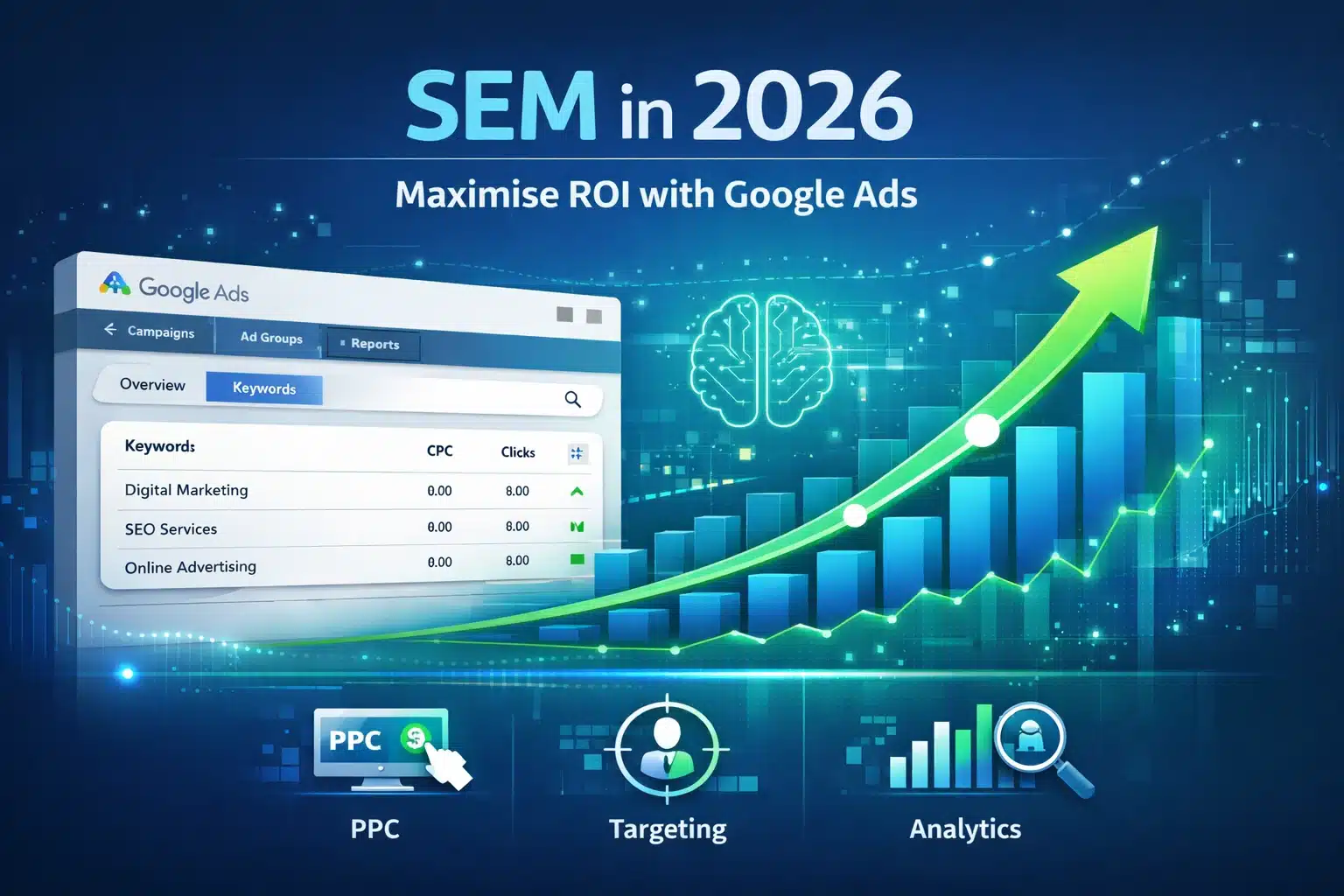
Table of Contents
Summary
Search Engine Marketing (SEM) is an integral part of digital marketing where companies advertise on the search engines through paid ads. In 2026, more and more companies will be relying upon SEM through digital marketing to improve visibility, attract appropriate visitors, and maximise the ROI. Google search engine marketing is still the major platform through which companies run an effective SEM campaign.
- Search Engine Marketing (SEM) remains a critical digital marketing strategy in 2026 for driving visibility and targeted traffic.
- Paid advertising, keyword strategy, ad creatives, landing page optimisation, and bid management form the foundation of SEM.
- Different SEM types, such as search ads, display ads, shopping ads, and remarketing campaigns, serve varied marketing goals.
- Advanced targeting, real-time analytics, and flexible budgeting make SEM highly measurable and scalable.
- Following best practices like keyword research, A/B testing, and performance monitoring is essential for maximising ROI.
Core Components of Search Engine Marketing
The important pieces of search engine marketing are as follows:
- Paid Advertising: These will show up at the top of search engine result pages (SERP) before the organic listings.
- Keyword Strategy: Finding high-intent keywords that will help you to connect with the audience you want to target.
- Advertising Copy and Creative: Creating ads that clearly convey your message and persuade customers that they should respond positively to what you are promoting.
- Landing Page Optimisation: Ensuring conversion-focused pages to maximise leads.
- Bid Management: Adjusting bids to optimise ad spend and performance metrics.
Types of Search Engine Marketing
| Type of SEM | Key Features |
| Search Ads | Appear on SERPs, target active searchers, measurable ROI |
| Display Ads | Banner or visual ads increase brand awareness, and retargeting options |
| Shopping Ads | Product listings in search results, drive direct sales, and CPC bidding |
| Remarketing Campaigns | Re-engage previous visitors, personalised ad targeting, and higher conversion |
What are the Features of Search Engine Marketing?
In 2026, search engine marketing will have the following features:
- Real-time performance tracking with advanced analytics.
- Audience targeting based on location, demographics, and interests.
- Budget flexibility with cost-per-click (CPC) and cost-per-acquisition (CPA) models.
- Integration with other marketing channels, such as social media and email campaigns.
Best Practices for Effective SEM Campaigns
To maximise ROI through SEM in digital marketing, the following practices are recommended:
- Conduct comprehensive keyword research using tools like Google Keyword Planner.
- Separate out your campaign to run different products under different categories and to target different audiences based on their own needs.
- Use A/B testing to get the most effective ad copy as well as landing pages.
- Monitor your campaign’s click-through rate (CTR), conversion rate, and quality score.
- Maintain compliance with advertising policies set by search engines.
Advantages of Google Search Engine Marketing
There are a number of benefits to Google SEM.
- Provides access to a large number of consumers looking for the products you offer.
- Provides measurable results with detailed analytics and reporting capabilities.
- Gives you the ability to optimise your campaigns for mobile, desktop and local searches
- Provides cost-effective solutions through bidding adjustment strategies and targeting.
In Conclusion
Search engine marketing continues to be a key component of 2026’s marketing mix, helping organisations to target specific customers and grow brand visibility to improve ROI. A solid campaign strategy will allow the organisation to use SEM tactically in its digital marketing to deliver measurable results, creating a competitive advantage.
To design a successful SEM campaign, organisations need to know the components of SEM, use the appropriate types of SEM strategy and execute by following best practices. Through the integration of several search marketing platforms, including those such as Google, search engine marketing campaigns can be designed based on data-driven analysis and results-oriented performance. Ready to maximise your ROI with data-driven SEM strategies? Start optimising your campaigns today.
Search Engine Marketing (SEM) in 2026 is essential for driving targeted traffic, improving online visibility, and maximising ROI through data-driven strategies. By leveraging Google Ads, effective keyword targeting, and continuous campaign optimisation, businesses can achieve scalable and measurable growth.
Partnering with 1702 Digital ensures your SEM campaigns are strategically managed, performance-focused, and aligned with your business goals, helping you generate high-quality leads and better returns on ad spend.
FAQs
Q1: What is search engine marketing?
Search engine marketing is the practice of advertising your website via paid advertisement services on search engines to gain visibility and traffic.
Q2: How does SEM differ from SEO?
SEM is a paid method used to advertise on search engines; SEO is a method used by businesses to naturally increase their search engine ranking without paying for it.
Q3: Which platforms support SEM campaigns?
The major platforms that support SEM campaigns include Google, Bing and Yahoo. Google being the primary SEM platform.
Q4: What are the main components of SEM?
Components of SEM include keyword research, ad creation, bid management, landing page optimisation & performance tracking.
Q5: What benefits does Google search engine marketing offer?
The value of using Google SEM includes measurable results, broad audience reach, flexible budget options, and enhanced targeting and marketing capabilities.
Like What You Read?
Have an Idea and Want to Build Something Together? Contact Us Now