
How Content Chunking Improves SEO, AI Visibility & User Experience?
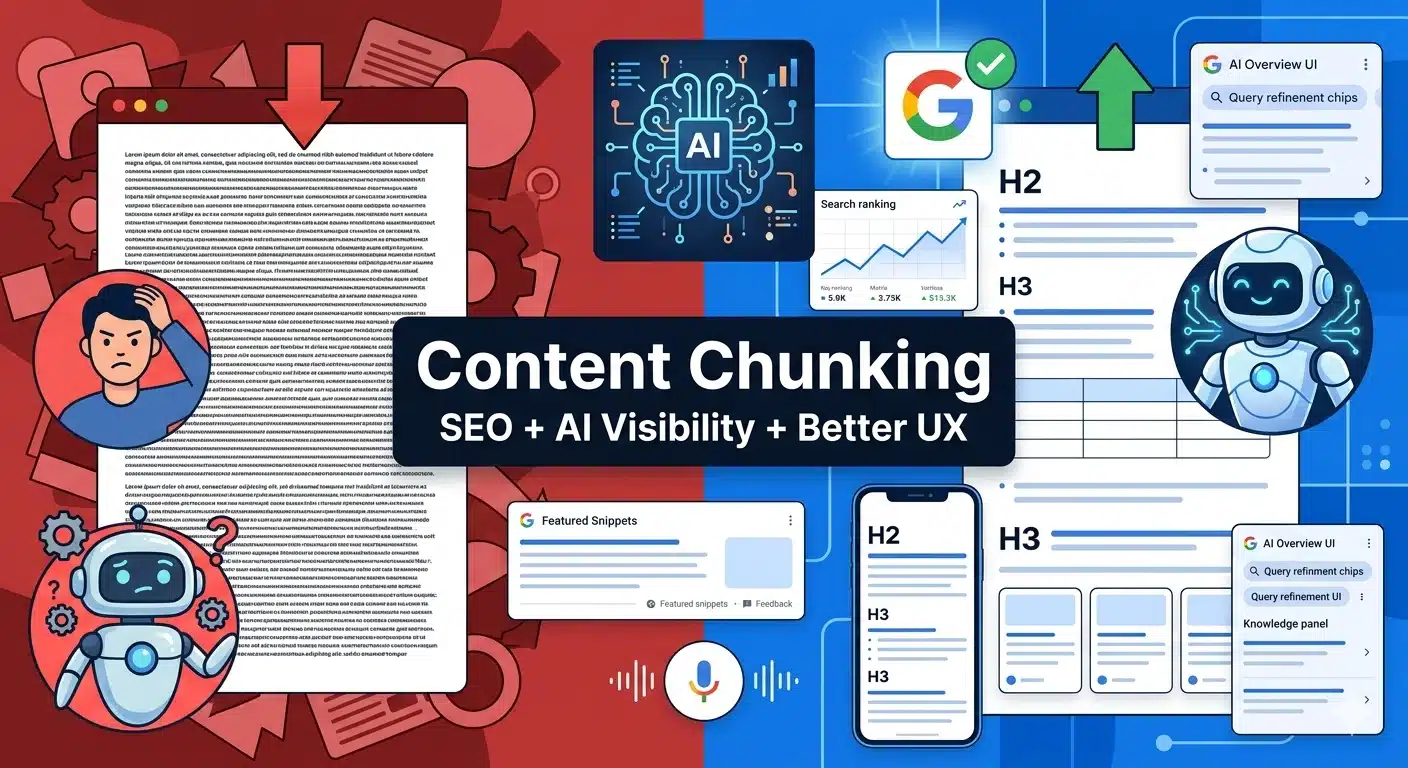
Table of Contents
The way content is structured has mattered for readability. But with AI-driven search now reshaping how information is discovered, structure has become a strategic necessity, not just a formatting preference. In this blog, we will discuss:
- What is content chunking, and how does it help in high-performing web pages
- Comparison between chunked content and traditional long-form writing
- Why AI and search engines reward well-structured pages
- A guide to audit your existing content
Remember the last time you opened unstructured and dense content. Most likely, you didn’t read the entire paper; you skimmed it. This type of user behaviour is precisely why content chunking is becoming necessary.
However, it is no longer merely an issue of attention span. Artificial intelligence can process text using patterns and chunks. Thus, content should be structured not only for users but also for AI. This is where AI content optimisation comes into play. By utilising it, it becomes easier to process, rank, and present your content through AI-powered engines and assistants.
What is Content Chunking?
Before proceeding with the strategy, try this simple exercise.
Read this: IBMUKCIANASA
Now read this: IBM – UK – CIA – NASA
Same letters. Entirely different experience. This is because the latter is easily read, as it’s chunked and divided into recognisable sections.
According to a 1956 study by George Miller, the human mind can hold no more than 7 items of information at a time. When that information is chunked into meaningful groups, learning and remembering it becomes much easier. When applied to digital media, chunking involves organising information through the use of:
- Short and coherent paragraphs
- Creation of appropriate headings and subtitles
- Use of bullets and numbering
- Tables to show data comparison
- Highlighting key ideas
Content chunking is the process of breaking content into smaller pieces of information that can be digested individually. In addition to making content readable, content chunking also helps in AI SEO optimisation.
Models powered by natural language processing algorithms, such as Google’s Search Generative Experience, are designed to recognise and extract the answers to queries on websites. These models analyse structure and context.
Chunking your page ensures that these algorithms have everything they need to find, understand, and present your content as the reliable answer.
Where Content Chunking Is Used in Real Pages
Content chunking is a technique you may have come across more than you think. Many high-converting web pages use frequent content chunking.
These may include:
- Blog posts: Breaking down the article into headings
- Landing pages: Separating features, benefits, and FAQ sections
- Comparison Tables: These organise information spatially, allowing readers to conclude without having to read the whole page.
- E-commerce sites: Dividing product information into specs, pros, and user reviews
- Help centres: Using chunking in step-by-step guides
Even featured snippets and responses generated by AI algorithms rely a lot on chunks within web pages. It’s vital to note that successful AI SEO optimisation is largely dependent on content chunking.
The Process of Structuring Text Effectively
It should be noted that chunking texts does not mean randomly inserting headings. The following is an effective method of structuring a document:
- Identifying key concepts that will form individual sections
- Organising sections in a logical order
- Developing an outline of the entire paper
Here are some recommendations for creating an outline:
- Writing a good primary heading to provide context
- Dividing a topic into sub-topics with H2 and H3 headings
- Ensuring that paragraphs are short and dedicated to specific ideas
- Using lists when comparing items or explaining concepts more clearly
- Answering a question or fulfilling a specific intention in each section
This approach helps your AI SEO content strategy by aligning your content with how SI systems interpret information, using a structured, hierarchical format.
Content Chunking Vs Long Form Content
There is an ongoing myth that chunking and long form are incompatible. They are not. The issue is actually one of structured vs unstructured content, and the distinction is important on both the user and algorithmic fronts.
| Dimension | Chunked Content | Traditional Long-Form |
| Scannability | High: all important information accessible at first glance | Low: users need to go through the text sequentially |
| Extractability by AI | High: discrete chunks make citation easier | Medium-low: relevant answer requires more effort |
| Mobile-readiness | Excellent: shorter text chunks adapt well to smaller screen sizes | Poor: lengthy chunks cause user fatigue |
| Depth and nuance | Can feel thin if overdone without connective prose | Naturally accommodates layered argument and detail |
| Voice search compatibility | High: concise answers match voice query expectations | Low: too long for audio delivery |
| Featured snippet eligibility | High: lists and tables often featured in snippets | Lower: unless the content is clearly structured |
The ideal combination? Long form that is also chunked. Depth and structure aren’t opposed concepts; in fact, some of the best sources on the internet are both.
AI and Search: The Importance of Structure
According to Statista, AI in marketing is expected to exceed $107 billion by 2028, underscoring the rapid evolution of AI from a mere innovation to the very foundation of digital marketing. This also holds for web search.
When the algorithm behind any AI-based search engine, like Google SGE and Bing Copilot, crawls a website, the primary concern is not to match the searched keyword but to determine whether the page has an AI content structure that allows extracting answers directly from it. Web pages that have this type of content will be:
- Selected more often for AI-generated answers
- Cited more confidently as source material
- Surfaced more prominently in featured placements
This is why businesses are investing in AI SEO services: it helps their content gain visibility in search engines as AI’s control increases.
Ready to start maximising your content’s potential through the power of AI-based SEO practices? The experts at 1702 Digital have extensive experience crafting AI SEO optimisation content strategies for humans and AI. Learn how you can leverage structure to your advantage with us!
SEO Benefits of Structured Content
Apart from being useful for AI search, there are other reasons businesses should structure their content. Below are the benefits of structured content for SEO:
Higher Featured Snippet Rates
Google likes websites that include definitions, how-to instructions, or comparative tables in their content, and it features these web pages in search results because it implies that the website is well-structured and informative. If you want your web page to get Google’s attention, you have to make sure it is structured.
Efficient Web Crawling Process
During web crawling, Google assigns a crawl budget to each site. Well-structured webpages will take less time for web crawlers to process, enabling the successful indexing of most of your content.
Reduced Bounce Rates
If people visiting your website can quickly find what they need, they will spend more time on your site. The longer users interact with your website, the more it is seen as an indication of high engagement by Google.
Better Results from Voice Search
By design, a voice assistant is meant to provide a straightforward answer rather than offer choices. The following types of content are most frequently selected by the system: FAQs, definitions, and marked answers. In essence, the structure of content directly affects its visibility in voice search results.
Increased Accessibility
A website with structured content is much easier for users who require assistive technologies, such as screen readers, to navigate. While it can be argued that increased accessibility is not a direct SEO benefit per se, its importance in relation to other factors should not be underestimated.
In all of these cases, the rule is simple: content produced with effective AI SEO strategies is more likely to be noticed and used than any other content.
Audit Process for Existing Content
If you have existing content, you don’t have to start afresh. Rather, you can perform an audit on it.
- Inventory your top 20 pages by traffic: These are your highest-value assets and the best candidates for structural improvement.
- Analyse the heading hierarchy: Ensure the document structure includes both H2 and H3 heading levels to create a logically structured document that is easy for users to navigate. If the document has no subheadings or a very weak heading hierarchy, then this is a major point to change.
- Determine the length of each paragraph: Identify any paragraph made up of more than five sentences. Such paragraphs should ideally be broken down into smaller ones or transformed into lists.
- Find buried answers: This means finding the part of a text that answers a particular question but is difficult to spot because it is inside a very long paragraph.
- Summarise the article or add a TL;DR section: It is beneficial to add a short recap or summary right at the beginning of a long article to give readers a glimpse of the key points or what they will read.
- Test readability/scannability: Are you able to understand what the text is about just by the headings? If you can’t then the heading hierarchy should be made stronger.
FAQs
-
How does chunking help mobile users?
Chunking improves mobility by dividing the text into smaller paragraphs which are more manageable and convenient to scan. Breaking down the texts into chunks helps the user easily find what they are looking for without scrolling through the entire page.
-
Will it work for B2B content?
Definitely, the nature of B2B content is that it can be quite technical, and use of content chunking will make such materials easier to read and understand.
-
Is it possible to overwhelm the reader with bullet points?
Yes, technically creating bullet points all over your content will leave your piece of work fragmented. The best way to handle this is to intersperse well-crafted paragraphs with bullet points.
-
Can good formatting lead to better voice search results?
Yes, Good formatting makes it simple for AI to pick out your information, which means that your key details are displayed in an orderly way.
-
Why do we divide texts into smaller parts?
Besides making reading and understanding easier, this is the straightforward answer. But, for AI-driven content chunking, the main goal is that AI can process your content more efficiently.
Like What You Read?
Have an Idea and Want to Build Something Together? Contact Us Now
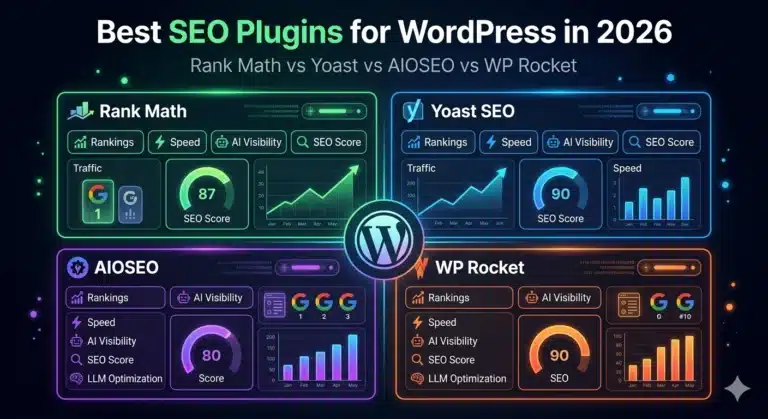
4 Best SEO Plugins for WordPress in 2026
Fed up with trying to make your WordPress website stand out? Then you need the appropriate software kit. Although great…
Read more →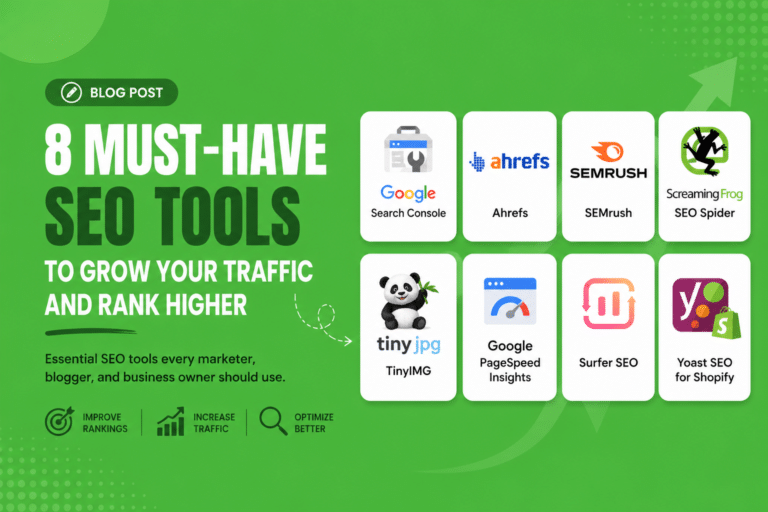
10 Best Shopify SEO Tools Every eCommerce Needs To Optimise The Store
There are challenges and tasks to take your Shopify store live and to rank it. With the number of online…
Read more →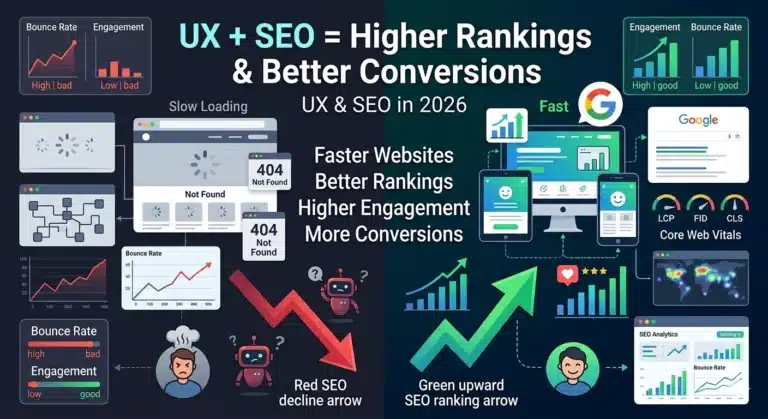
A Guide for User Experience (UX) and its SEO Impacts in 2026
User experience is no longer just an aspect of design; it is a key factor in improving search engine efficiency.…
Read more →